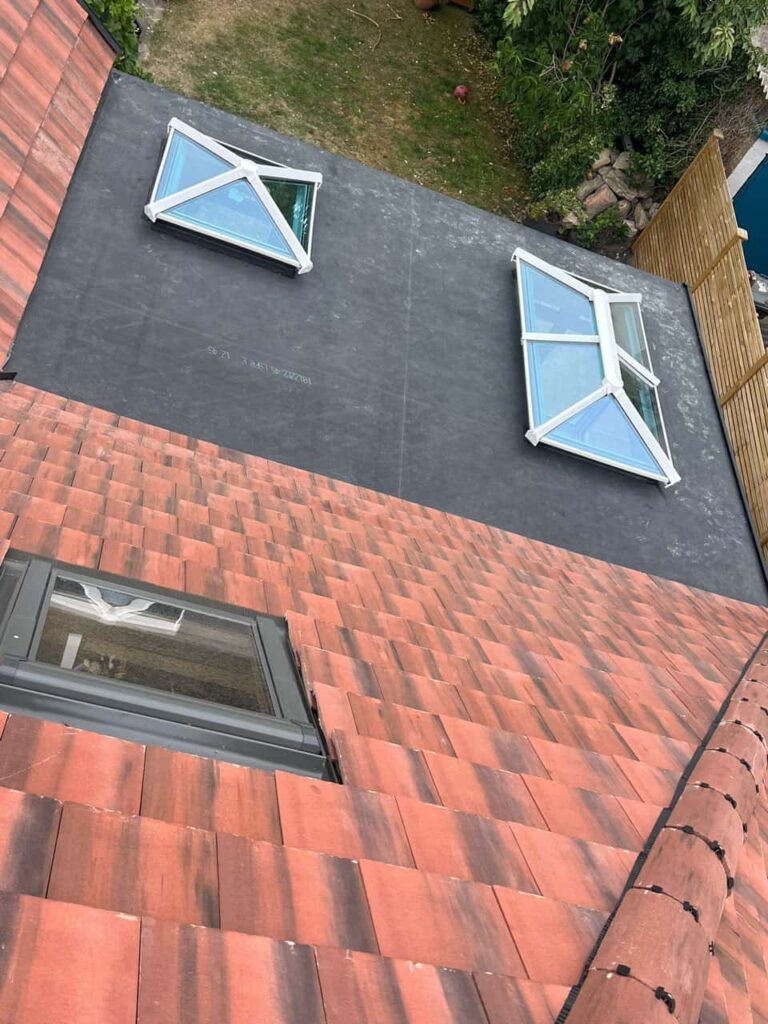
Flat felt roofing is designed to provide a continuous, weather-resistant covering over garages, extensions and other flat-roofed structures. When correctly installed and maintained, it can offer dependable protection for many years. However, constant exposure to sunlight, rain, temperature changes and standing water gradually places stress on the material.
Cracks, blisters and weak spots should not be viewed as surface imperfections alone. They can indicate that the felt, its joints or the structure beneath it is beginning to deteriorate. Understanding why these defects develop makes it easier to arrange appropriate repairs before moisture reaches the building below.
Common Causes of Damage to Flat Felt Roofs
Several factors can affect a felt roof at the same time. A professional inspection should therefore assess the entire roof rather than concentrating only on the most visible defect.
Natural Ageing Reduces Flexibility
Roofing felt becomes less flexible as it ages. Long-term exposure to ultraviolet light and changing weather conditions can gradually dry the surface, making it more brittle and less able to accommodate movement.
Once the material loses flexibility, minor movement within the roof may cause cracking. These cracks can begin as fine surface lines but may eventually widen enough to allow water beneath the covering.
Temperature Changes Cause Repeated Movement
Felt roofing heats up in direct sunlight and cools when temperatures fall. This causes the material and the supporting roof deck to expand and contract.
A correctly installed roof is designed to cope with a reasonable amount of movement. However, repeated temperature cycles can place additional strain on joints, edges and areas around roof penetrations. These vulnerable points may eventually split or begin to lift.
Trapped Moisture Can Create Blisters
Blisters appear as raised or swollen areas on the felt surface. They usually form when moisture or air becomes trapped between layers of roofing material or between the felt and the roof deck.
As the roof warms, trapped moisture can turn into vapour and expand, pushing the felt upwards. The blister may remain sealed initially, but continued movement can stretch and weaken the material. If it cracks or is punctured, water can enter the roof system.
Walking on a blister can also cause it to rupture, so raised areas should be examined rather than pressed down or cut open.
Standing Water Places Pressure on Weak Areas
Flat roofs are normally formed with a slight fall to direct rainwater towards an outlet. If the roof deck settles, the outlet becomes blocked or the original gradient is inadequate, water may collect in low areas.
Persistent standing water keeps the felt wet for longer and can accelerate deterioration around laps, joints and existing cracks. It may also increase the load on the roof deck, allowing depressions to deepen and making the drainage problem worse.
The presence of ponding water does not always mean that the felt has failed, but it is a sign that the roof’s drainage and underlying structure should be checked.
Movement in the Roof Deck Can Damage the Felt
The felt covering depends on a stable surface beneath it. If the roof deck flexes, swells or begins to deteriorate, the movement can transfer directly into the roofing material.
Cracks and soft areas may develop where boards meet or where the deck lacks adequate support. A surface patch may provide limited benefit if the damaged or unstable section beneath the felt is not addressed at the same time.
Joints, Edges and Upstands Are Vulnerable
Many felt roof defects begin at junctions rather than across the main surface. Laps between sheets, perimeter edges, outlets and upstands around adjoining walls must all remain properly sealed.
If adhesion weakens or an edge lifts, wind-driven rain may pass beneath the covering. Water can then travel between layers and appear inside the property some distance from the original opening.
Careful detailing during installation is essential because even a small gap at a junction can undermine an otherwise sound roof.
Physical Damage Can Create Weak Spots
Foot traffic, falling debris and work carried out around the roof can puncture or compress the felt. Sharp objects may cause obvious tears, while repeated pressure can produce less visible damage that only becomes apparent during wet weather.
Areas around ladders, equipment and frequently accessed sections are especially susceptible. Flat roofs should only be walked on when necessary and with suitable precautions to protect the covering.
Previous Repairs May Begin to Deteriorate
A repaired area can become a weak point if the patch has poor adhesion, inadequate coverage or does not move in the same way as the original material. Water may enter around its edges even when the centre of the repair still appears intact.
Repeated patching can also make it difficult to identify the true condition of the roof. If several repairs have failed in different places, the entire covering and supporting deck may require a broader assessment.
Warning Signs That Should Not Be Ignored
Signs that a flat felt roof may need attention include:
- Visible cracks, splits or open joints
- Raised blisters or bubbles
- Soft or spongy sections under the covering
- Felt lifting around edges and upstands
- Water remaining on the roof after rainfall
- Damp patches or staining inside the property
- Repeated leaks following previous repairs
- Moss or debris restricting roof outlets
Early investigation can help establish whether the problem is confined to a repairable area or reflects more widespread deterioration.
Why Professional Inspection Matters
The visible defect is not always the full cause of a flat roof problem. Moisture may have travelled beneath the felt, affected the roof deck or entered through a nearby joint. Covering a crack without checking the surrounding materials may leave hidden deterioration untreated.
A professional assessment considers the condition of the felt, seams, outlets, edges, drainage and supporting structure. This allows the repair to address both the visible damage and the reason it developed.
Conclusion
Flat felt roofs commonly develop cracks, blisters and weak spots because of ageing, temperature movement, trapped moisture, poor drainage or instability within the roof deck. These defects can gradually reduce the roof’s ability to keep water out, even when an internal leak has not yet appeared.
Prompt assessment provides the best opportunity to contain localised damage and protect the structure beneath. If you have noticed deterioration on a flat felt roof in West Bridgford, Nottingham, West Bridgford Roofing Repairs can inspect the affected area and recommend a suitable course of action. Contact the team to arrange a professional roof assessment.
Call us on: 0115 647 1193
Click here to find out more about West Bridgford Roofing Repairs
Click here to complete our contact form and see how we can help with your roofing needs.